When a buyer walks into a well-designed model unit or sales room, the environment has already started telling the story of the development. This page explains how the spaces we design create a better context for brokers to present new projects.
Brokers who present new developments to buyers understand the challenge. You are selling something that does not fully exist yet. You are asking buyers to project themselves into a future space based on plans, renders, and your own ability to communicate the vision.
A well-designed model unit or sales room reduces the cognitive load of that projection. When the buyer can physically experience a space that feels like the finished product, the conversation changes. Objections become fewer. The emotional connection happens faster. The decision-making process shortens.
This is not an accident. It is the result of deliberate design choices made with the buyer's psychology in mind.
Talk to our team
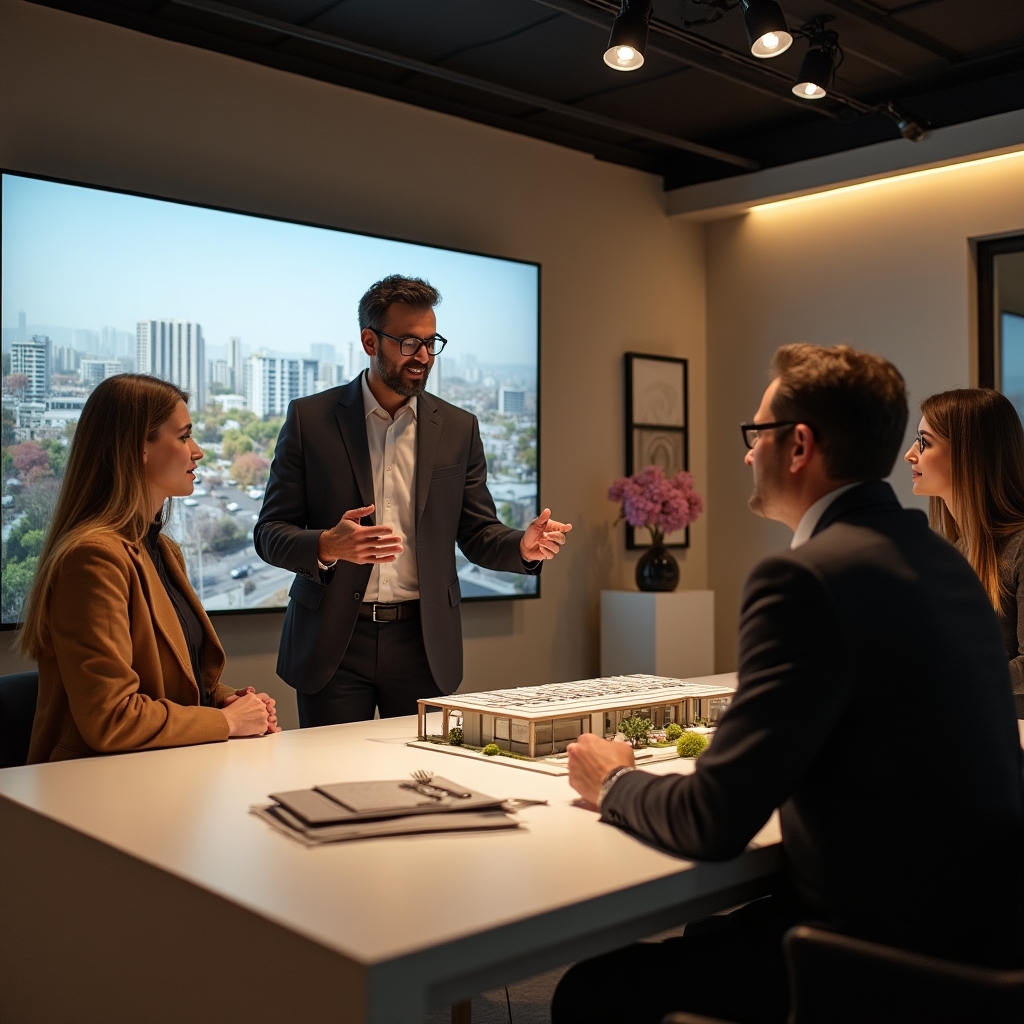
When the space itself communicates quality and lifestyle, you spend less time explaining and more time listening. Buyers who feel at home in a model unit are already imagining their life there. Your role becomes one of facilitating a decision rather than persuading someone to make one.
The sales room is often the first physical touchpoint a buyer has with a development. A space that feels considered, coherent, and aligned with the project's positioning sets a tone that carries through the entire sales conversation. It signals that the developer takes quality seriously.
Materials, finishes, and proportions communicate quality in ways that words and renders cannot. When a buyer touches a door handle, sits on a sofa, or notices how natural light moves through a space, they are gathering real information about the development. We design these moments intentionally.
When the sales room, model unit, and common areas all feel like they belong to the same project, the buyer's confidence in the development increases. Inconsistency creates doubt. Coherence creates trust. We design all spaces in a development to speak the same visual language.
Furnished and finished to the standard of the actual development. Spatial proportions, material quality, and furniture scale are calibrated to the unit type and buyer profile. These spaces are designed to be experienced, not just viewed.
Environments that present the development's identity through materials, scale models, graphic displays, and spatial atmosphere. Designed so that the buyer understands the project's positioning from the moment they enter.
Lobbies, amenity spaces, and outdoor areas that demonstrate the lifestyle promise of the development. When buyers can see and feel these spaces, the development's value proposition becomes concrete rather than abstract.
Italia 79, Termas de Río Hondo
Santiago del Estero, Argentina